
Estimating portions can be done using the My Plate Planner. My Plate is divided according to how much of each food group should be included with each meal.
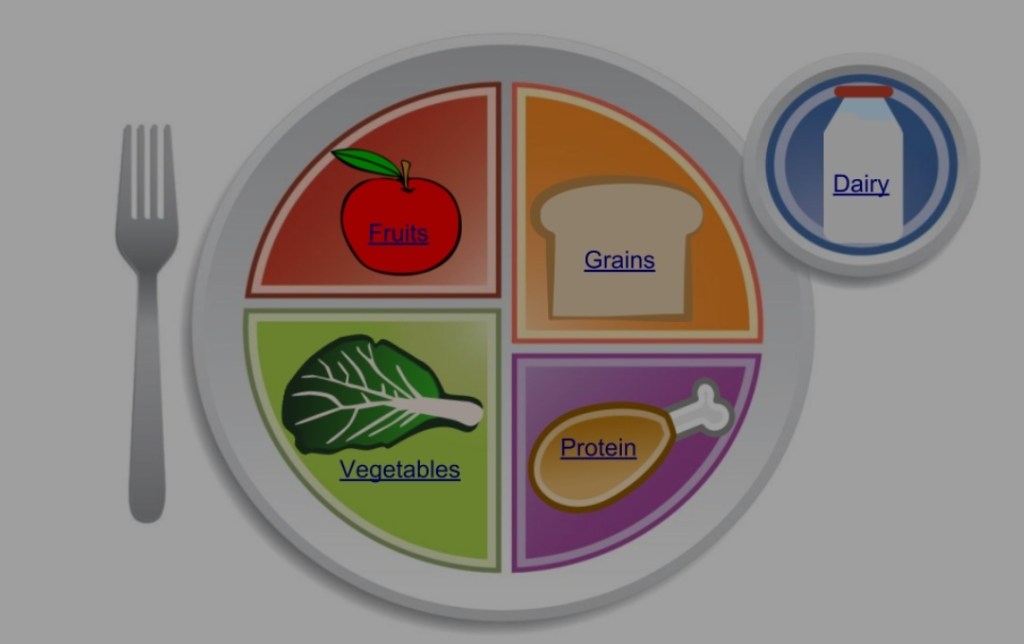
Planner Methods of Use:
• Fill half of your plate with vegetables such as carrots, broccoli, salad, and fruit.
• Fill one-quarter of your plate with lean meat, chicken, or fish (about 3 ounces)
• Fill one-quarter of your plate with a whole grain such as ⅓ cup rice
• Choose one serving of dairy
• Add margarine or oil for preparation or addition at the table
Building a Healthy Plate: Choose Nutrient-Dense Foods

Planning a healthy diet using the MyPlate approach is not difficult. According to the picture above, half of your plate should
have fruits and vegetables, one-quarter should have whole grains, and one-quarter should have protein. Dairy products should be low-fat or non-fat. The ideal diet gives you the most nutrients within the fewest calories. This means choosing nutrient-rich foods.
Fill half of your plate with red, orange, and dark green vegetables and fruits, such as kale, bok choy, kalo (taro), tomatoes,sweet potatoes, broccoli, apples, mango, papaya , guavas, blueberries, and strawberries in main and side dishes. Vary your choices to get the benefit of as many different vegetables and fruits as you can. You may choose to drink fruit juice as a
replacement for eating fruit. (As long as the juice is 100 percent fruit juice and only half your fruit intake is replaced with juice, this is an acceptable exchange.) For snacks, eat fruits, vegetables, or unsalted nuts.

Fill a quarter of your plate with whole grains such as 100 percent whole-grain cereals, breads, crackers, rice, and pasta.
Half of your daily grain intake should be whole grains.
Select a variety of protein foods to improve nutrient intake and promote health benefits. Each week, be sure to
include a nice array of protein sources in your diet, such as nuts, seeds, beans, legumes, poultry, soy, and seafood. The
recommended consumption amount for seafood for adults is two 4-ounce servings per week. When choosing meat, select lean cuts. Be conscious to prepare meats using little or no added saturated fat, such as butter.

If you enjoy drinking milk or eating milk products, such as cheese and yogurt, choose low-fat or nonfat products.
Low-fat and nonfat products contain the same amount of calcium and other essential nutrients as whole-milk products, but with much less fat and calories. Calcium, an important mineral for your body, is also available in lactose-free and fortified soy beverage and rice beverage products. You can also get calcium in vegetables and other fortified foods and beverages.
Oils are essential for your diet as they contain valuable essential fatty acids, but the type you choose and the amount you
consume is important. Be sure the oil is plant-based rather than based on animal fat. You can also get oils from many
types of fish, as well as avocados, and unsalted nuts and seeds. Although oils are essential for health they do contain
about 120 calories per tablespoon. It is vital to balance oil consumption with total caloric intake. The Nutrition Facts label provides the information to help you make healthful decisions.

In short, substituting vegetables and fruits in place of foods high in added sugars, saturated fats, and sodium is a good way to make a nutrient-poor diet healthy again. Vegetables are full of nutrients and antioxidants that help promote good health and reduce the risk for developing chronic diseases such as stroke, heart disease, high blood pressure, Type 2 diabetes, and certain types of cancer. Starting with these small shifts in your diet as mentioned above will boost your overall health profile.

If you enjoyed this post don’t forget to like, follow, share and comment!
Follow my blog for more heath and exercise-related content
 DandeLion